
Guidelines for Checking Your New Headphones
These are few of the identical factors I evaluate when assessing headphones and earbuds across all price ranges.
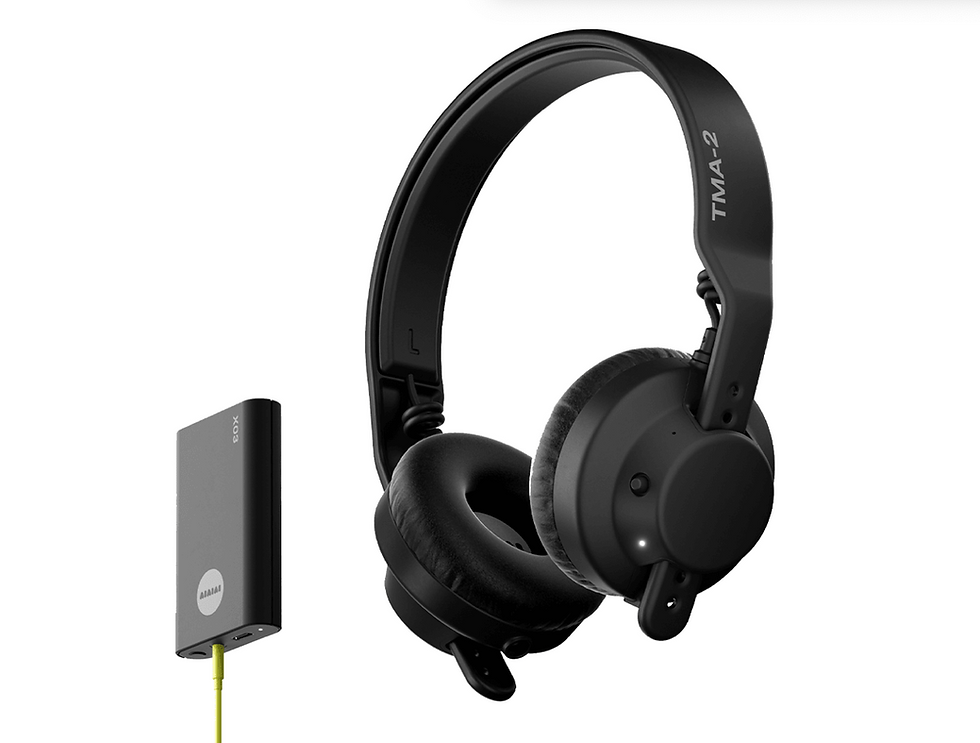
Assess the comfort and fit
Ensure your headphones are capable of accommodating extended listening periods
Upon initially donning a new pair of headphones, do not be deceived by the preliminary comfort. Allocate time to accurately adjust the headband and ensure that the ear cushions create a firm seal on the sides of your head. Preferably, wear your headphones for the maximum duration you anticipate using them in practical scenarios. I require headphones to maintain comfort on a six-hour, cross-country travel.
Utilise a set of earbuds and test each ear tip size to ensure the correct one is fitted. Should your set be compatible with the feature, perform the ear tip fit test within the companion app for your earbuds, which use software to assess the integrity of the seal. As with over-ear or on-ear headphones, it is essential to use earbuds for a sufficient duration to provide comfort during prolonged use.
If your headphones or earbuds are marginally unpleasant, attempt to make modifications or contemplate returning them. The discomfort will progressively intensify as the headband and ear cushions deteriorate.
Test the microphone
This is an essential evaluation for calls and audio recordings
At some juncture, you will likely need to conduct a phone call using your headphones. If you are selecting a new pair of headphones for your office configuration, virtual meetings and calls may be your principal application. Therefore, it is advisable to assess the microphone.
To accomplish this, attempt to record a voice memo while utilising the headphones or earbuds, and thereafter evaluate the result. This will provide insight into the quality of your voice as captured by your headphones' microphone under optimal conditions. Subsequently, initiate a call and request another individual to provide feedback on your vocal quality. This will provide insight into what others may perceive when you speak over your headphones' microphone, considering audio compression and quality degradation.
Deplete the battery
Evaluate the battery assertions of your headphones independently
Prior to purchasing your headphones, you likely examined their battery life parameters. Nevertheless, it may be unknown to you that audio manufacturers employ certain testing circumstances to substantiate the battery life assertions utilised in their marketing efforts. Some brands conduct tests with Active Noise Cancellation (ANC) on or disabled, while others assess performance with it either activated or deactivated. Some headphone manufacturers will specify the volume level or audio codec employed to achieve their advertised battery life statistics.
In other words, if you are not vigilant, you may acquire headphones with a significantly reduced battery life than anticipated. Evaluate this personally by depleting their battery life across different modes. Experiment with various volume settings, active noise cancellation modes, and both wired and wireless playing, monitoring the battery depletion over time. If you prefer not to invest a week's listening time on this test, only monitor the battery depletion over one hour and extrapolate the headphones' total duration accordingly.
Evaluate the efficacy of your headphones' Active Noise Cancellation capabilities
Ensure they obstruct (and permit) sound
Acoustic isolation is essential for fostering immersion, reducing audio leakage, and obstructing extraneous noise. Unless use open-back headphones, your new pair will employ a method of passive sound isolation. This maintains your music within and obstructs distracting noise by establishing a physical barrier in your ear or head. Headphones or earbuds equipped with active noise-cancelling technology utilise software to emit frequencies that negate ambient noise.
If immersion and noise cancellation are priorities, evaluate the active noise cancellation (ANC) efficacy of your headphones. You may take them to a cacophonous environment, such as a neighbourhood coffee shop, to assess their efficacy in mitigating background noise at different music volume levels. Furthermore, it is advisable to utilise the transparency mode available on your headphones. Will you be able to communicate your drink preference to the flight attendant while utilising transparency mode, or will you need to remove your headphones to engage in a brief conversation?
Ensure that you appreciate the audio quality
Conduct tests, configure equalisers, but most importantly—perform music
Ultimately, we purchase headphones primarily for music consumption, making sound quality the paramount consideration. Regardless of your knowledge regarding the criteria for "good" or "bad" sound quality—acknowledging that sound quality is subjective, although research indicates the audio traits favoured by the majority—there exist straightforward assessments that can assist. Commence with Audio Check's The Ultimate Headphones Test. It is a compilation of audio assessments that encompass frequency response, spectral flatness, dynamic range, quality, and distortion.
By listening to a compilation of audio samples provided on the website or in a YouTube video, you will discern the performance of your headphones in demanding environments. These samples replicate the auditory experience one may have while listening to diverse genres using headphones or earbuds throughout the course of ownership.
Primarily, you ought to enjoy your preferred music using your new headphones. If you enjoy audio podcasts or films, consider listening to them through your headphones as well.
The performance of a pair on a test is irrelevant if their sound does not appeal to you when playing your preferred music. Pay attention to factors such as instrument separation, volume, and clarity. The distinction between your new and old headphones will be most apparent in songs you have frequently listened to, as you are already familiar with the nuances.
Utilise the return policy while it remains available.
The realm of headphones and earbuds may represent the most subjective sector in technology. Individuals will possess varying preferences regarding comfort, noise cancellation, and music quality. Consequently, you should utilise the limited timeframe during which your new headphones are eligible for return judiciously.
Assess the duration available for testing and utilising your equipment prior to the expiration of the return period. Furthermore, contemplate selecting a merchant for your new headphones or earbuds based on the specifics of their return policy. I purchase Best Buy's annual membership to obtain a substantial 60-day return period on most items, allowing me sufficient time to determine if a product suits my needs. If you want to purchase during the holidays, be aware that most retailers provide extended return periods until the new year, allowing additional time to evaluate your new headphones and earbuds.


Comments