
Tesla Explores a Lower-Cost SUV to Expand Its Entry Lineup
With a single-motor setup and reduced battery size, the upcoming vehicle signals a strategic shift toward cost efficiency.
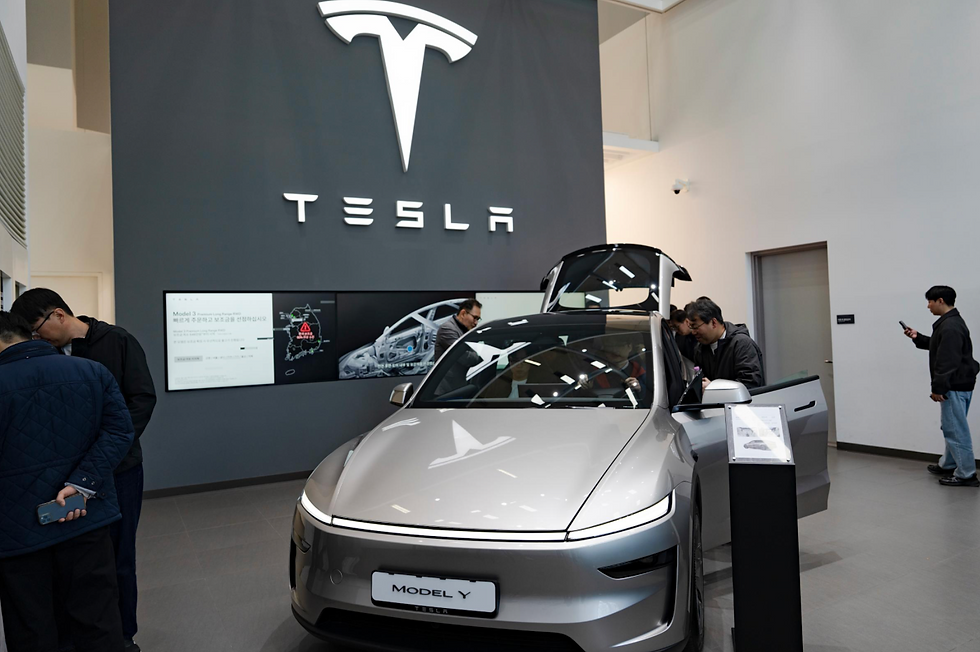
Tesla is purportedly reconsidering its entry-level aspirations. In light of extensive conjecture and strategy shifts, the carmaker is allegedly advancing with a completely new compact electric SUV. Marketed as a significantly more economical option compared to the brand's existing range, the upcoming model is in development in Shanghai and indicates a pragmatic transition for the electric vehicle behemoth. The vehicle presents an entirely new design, developed from scratch, aimed specifically at enhancing affordability rather than being a scaled-down version of existing platforms.
The vehicle is anticipated to be around 14 feet long, nearly two feet shorter than the prevailing Model Y. To attain a pricing point far beneath the $37,000 Model 3, engineers are emphasising rigorous cost-reduction strategies. The compact SUV would allegedly employ a significantly lighter chassis, a solitary electric engine, and a diminutive battery pack with an abbreviated driving range. Tesla has commenced supplier engagement to secure manufacturing logistics and component procurement for the optimised production process. This development signifies a significant deviation from CEO Elon Musk's prior directives. In 2024, the executive infamously abandoned plans for a $25,000 car to concentrate entirely on the company's specialised Robotaxi initiative and the completely autonomous Cybercab. Currently, internal strategy appears to have adjusted to regulatory conditions. The new model is engineered to close the gap, functioning predominantly as a driverless car while essential retaining a steering wheel and pedals. This dual-purpose strategy guarantees the car's viability in international countries where self-driving legislation is still years from ratification.
The strategic shift occurs at a pivotal moment for the manufacturer. Tesla is experiencing increasing pressure due to a succession of unmet delivery targets and slow sales growth in significant international markets. As autonomous units prepare for mass production at the Texas gigafactory, the urgent demand for an affordable, high-volume consumer vehicle has become increasingly evident. Executives have not yet officially verified an official manufacturing schedule for the new SUV, and considering the brand's historical propensity for delays, consumers may experience a prolonged wait until this economical vehicle becomes available.


Comments